Lincoln Beachey's Fatal Final Flight Near San Francisco, California March 14th, 1915 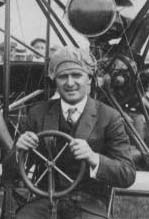 The Man Who Owns the Sky... The Man Who Owns the Sky...
The first to recover from a spin – The first to fly upside-down – The first to “loop-the loop” – Someone has to be first, and if you’re a pilot, Lincoln Beachey is the most famous man in aviation that you have probably never heard of… He was the first person to do each one of these maneuvers. A famed stunt pilot, air racer, and performer, Beachey would meet his untimely end at the age of 28 in the cold waters north of San Francisco. Born and raised in the “City by the Bay”, his upbringing paralleled that of the Wright Brothers – in bicycling. By the age of 13, he ran his own bicycle shop, and by 15, he was repairing motorcycles and other small engines. Beachey flew his first plane in Toledo, Ohio, at age 18. He was working in the Curtiss airplane factory, and his employer refused to give him a chance to fly. Beachey then began sleeping in a tent at the factory, and at dawn used to take out one of the craft and make a flight unknown to his employer. He kept this up several weeks and, after several mishaps in which he crashed Curtiss' airplanes, finally demanded a contract, joining the Curtiss Exhibition Team. Flying for Food... His signature stunt was a vertical climb until his plane's engine stall, then a dive toward the ground, pulling up at the last possible minute. By 1913, he worked up a stunt with a partner, racecar driver Barney Oldfield, in which he raced a car driven by Oldfield around a track, usually beating the car. He would end each race with a “loop,” increasing the number of loops every time other stunt pilots increased theirs. At the PPIE... In early 1915, Beachey's career was at its peak. He had finished work on Beachey-Eaton Monoplane, powered by 80 horsepower Gnôme Monosoupape ("single valve") rotary engine, and was looking forward to returning to the skies - as part of the pre-opening publicity for the Panama Pacific International Exposition, during the PPIE's opening ceremonies, and having secured a contract to provide aerial exhibitions in both his Beachey-Eaton biplane and new monoplane. | 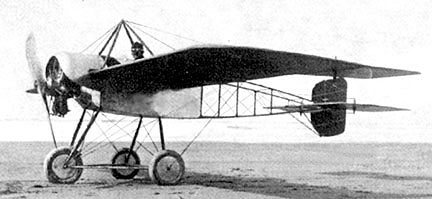
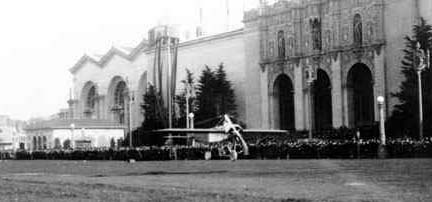
| On Sunday, March 14th, 1915, Beachey prepared for an flight to showcase his new monoplane in front of a crowd of over 50,000 at the PPIE on the northern shore of San Francisco. Despite a warning from Army aviators about his daredevil maneuvers in his monoplane, Beachey gunned his engine, started his takeoff roll, and was off the ground in less that fifty feet. | 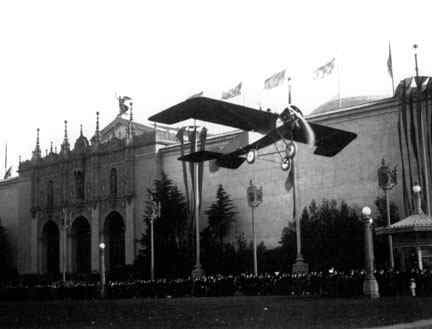 | Beachey made a loop, then flipped the plane over on its back for an upside down flight. Intent on exhibiting the ability of his new plane, Beachey's attention failed to realize he was now only 2,000 feet above the water - too close to complete his stunt.
He jerked the controls back to pull the plane out of its inverted flight, but the stress on the plane caused the left wing to break off, then the right one to do so – sending the monoplane into a dive. The bent plane impacted the water at a high rate of speed, alongside of the transport Crook, with Beachey still strapped in his chair. | 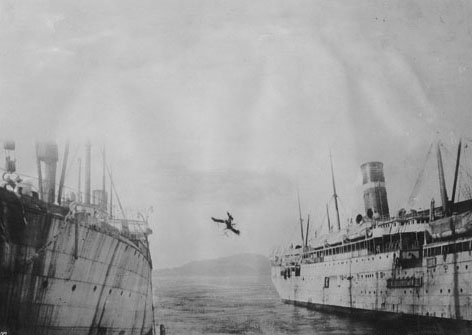 | | The force of the crash embedded the plane and Beachey in thirty feet of mud and water in San Francisco Bay. An hour after the crash, the winch aboard the U.S.S. Oregon pulled taut, and divers from the battleship raised the monoplane, its wings sheared, and Beachey still strapped in his seat. The autopsy reported that he had survived the crash and had died from drowning. | 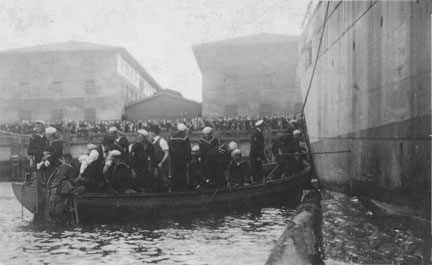 |
| Honoring the Legend... Beachey's memorial service and funeral was one of the biggest the city of San Francicso has seen to that time. The Mayor of San Francisco, James Rolph, presided over the matter, and Beachey was buried at the Cypress Lawn Memorial Park in Section D, Lot 23. | This opinion piece appeared the “Oakland Tribune” in the days following Beachey's death | The direct cause of the mishap which resulted in the death of Lincoln Beachey was the same spirit that ruled at Rome in the time of Nero. A public, thirsting for novelty and eager for "thrills," is not sufficiently entertained by exhibitions of flight through the air; it has demanded that the performance be accompanied by hazardous variations. Before the public consents to be interested there must be "loop the loops," "death dips" and other incidents of a hair-raising kind. Beachey is only one of many victims to this craze for seeing somebody do a hazardous thing. It may be that civilization may some day reach a point where normal and wholesome things will satisfy the human appetite. But that day is not yet. |
| | | |
|