The Lindbergh of Mexico
Near Chatsworth, New Jersey
July 12th, 1928 Born to Greatness...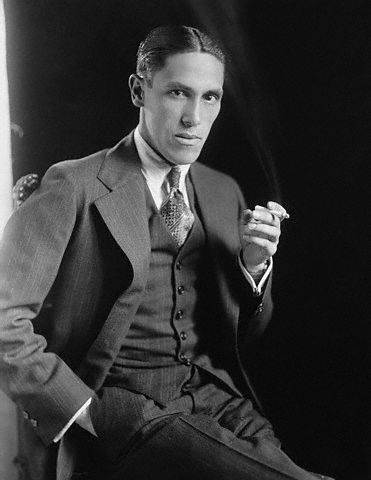 Born in Villa Ramos Arizpe, Coahuila, Mexico, on December 9th, 1905, Emilio Carranza Rodriguez was the great-nephew of President Venustiano Carranza of Mexico and the nephew of famed Mexican aviator Alberto Salinas Carranza, who had founded the Mexican Air Force school of aviation. Many of his formative years were spent in and around aviation, on both sides of the border between the United States and Mexico. At age 18, he became a national hero when he strafed Yaqui Indians in the Mexican state of Sonora while helping to put down the de la Huerta rebellion. But, while in Sonora, his plane crashed, and his face had to be reassembled with the use of platinum screws. He was commissioned into the Mexican Air Force in January of 1926 as a Lieutenant. In June of 1926, he went to the United States to buy an airplane which he intended to use for long distance flights, acquiring a Lincoln Standard airplane in Chicago, with a 180 horsepower Heso engine. During his service in the Mexican Air Force, he supervised the repair of the old wooden airplane, installed a 185 horsepower BMW engine, and named it the “Coahuila”. On Friday, September 2nd, 1927, at 5:50 in the morning, the "Coahuila" departed Mexico City for Ciudad Juarez, landing there at 4:48 in the afternoon. Captain Emilio Carranza was received triumphantly. His arrival to Ciudad Juarez coincided with Charles A. Lindbergh's and the Spirit of St. Louis arrival at El Paso, Texas where they both celebrated together, and forged a lifelong friendship - when Lindbergh visited Mexico City on a goodwill flight on December 14th, 1927, Captain Emilio Carranza was Charles Lindbergh's official companion while in the city.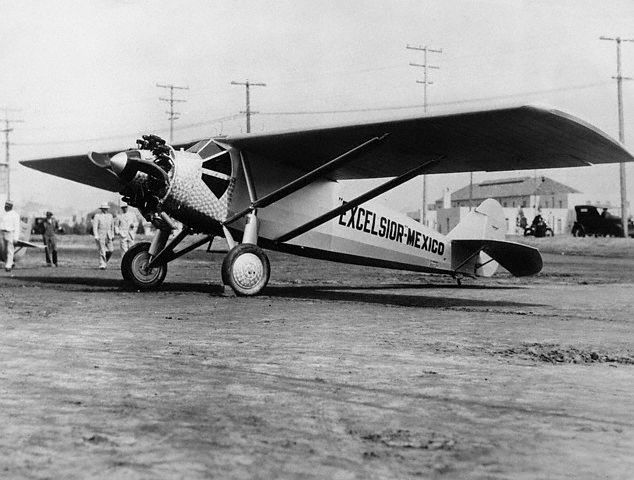 An Idea Takes Flight... While Lindbergh was in Mexico, the newspaper “Excelsior” promoted the idea that the people of Mexico should sponsor a goodwill flight from Mexico City to Washington as a return gesture of Lindbergh's flight. Numerous sponsors stepped forward to promote the cause of peace, goodwill and understanding between the United States and Mexico. When Charles Lindbergh heard of the possible flight, he himself donated $2,500 towards the effort. A committee was formed, and they selected the Ryan B1, a near replica of the same airplane Lindbergh had flown from New York to Paris, and Captain Emilio Carranza, who was still serving with the Mexican Air Force, as the pilot for the flight between Mexico City and Washington DC. At age 22, on May 24,1928, departed from San Diego at 3:20 in the afternoon, on a non-stop flight in his newly-manufactured Ryan plane, named the “Excelsior,” bound for Mexico City. When he landed at 9:40 the following morning, with over 100,000 people on hand, he had set the record for the third longest non-stop solo flight by flying 1,875 miles in 18 and a half hours. Off I Go...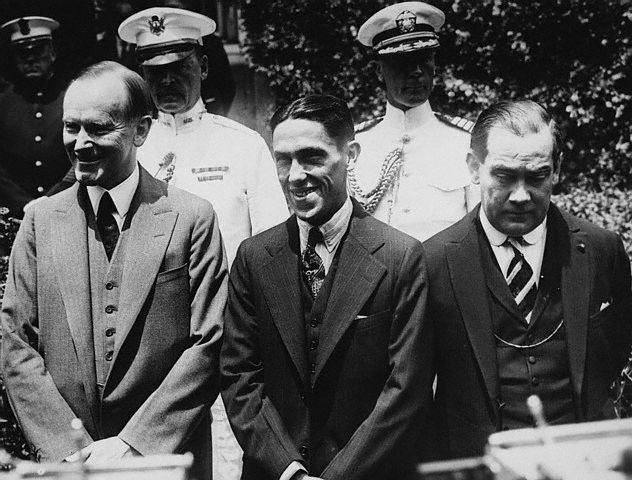 A couple weeks later, at 8:08 in the morning of June 11th, 1928, Carranza took off from Mexico City in the “Excelsior” for his nonstop flight to Washington, DC. Encountering fog and bad weather when he crossed into the United States, he continued as best as he could. Unfortunately, he was forced to make an emergency landing outside of Mooresville, North Carolina, at 3:45 the following morning. At 1:50 in the afternoon on June 12th 1928, Carranza took off from Mooresville, NC and lands at Bolling Field in Washington, DC, at 5:15 PM. Both countries celebrated Carrnaza's flight. He was personally congratulated by the President of the United States Mr. Calvin Coolidge and invited to a dinner in the White House, and he placed a wreath at the Tomb of The Unknown Soldier in Arlington Cemetery. He also announced his intention to fly non-stop from New York City back to Mexico City. On June 17th, he was escorted into the air from Bolling Field by a squadron of military aircraft and was received by another military squadron as he headed into Mitchell Field, New York. When he arrived, Mayor Jimmy Walker awarded Carranza the key to New York City, and he was honored by Secretary of Commerce Herbert Hoover. Luckily, Carranza's father, Sebastian Carranza, held a post with the Mexican Consulate in the city. The young Carranza was also invited to review the cadets at West Point – a rare honor, given his company office status. He made plans to leave New York on July 3rd and arrive in Mexico City July 4th – except his flight lacked favorable weather conditions. Carranza was eager to return to Mexico, but his friend Lindbergh advised him to delay. Nevertheless, Carranza made several attempts to take off which terminated in flight cancellations.
On the morning of July 12th, Carranza once again attempted to fly to Mexico. After numerous airport officials, and the U.S. Weather Bureau, gave him warnings and weather reports of a possible electrical storm, Carranza canceled his departure once more and ordered his airplane hangared. But when he returned to his hotel, the Waldorf-Astoria, he was met with a telegram. He went to the telephone and called for his airplane to be made ready for his immediate departure. He departed from Roosevelt Field on July 12th at 7:18 in the evening – and into the face of a severe thunderstorm. Although he was under the impression that it would be clear as he flew southward. Grim Discoveries... No word came from the “Excelsior” or Carranza. But then, the following afternoon, on July 13th, John Henry Carr, a mechanic from the town of Chatsworth, New Jersey, his wife Marie Carr, and his mother, May Carr, had stopped along the tracks of the Central Railroad of New Jersey in the Pine Barrens of Tabernacle Township to pick blueberries. As the Carrs worked their way along the railroad line, they came upon several large splinters of wood. Finding additional fresh splinters, Mr. Carr decided to leave the vicinity of the tracks to further explore the thick underbrush. Soon thereafter, Mr. Carr came upon a wing of an airplane and after proceeding a short distance, he found the body of an aviator. He then spotted the rest of the wreckage about 120 feet away, consisting of the fuselage and the Wright Whirlwind engine. The fuselage, the engine, and the other wing had crashed down a clearing in the thick pines. Mr. Carr ran back through the woods, and with his family drove into town where he telephoned the County Detective, Arthur Carabine of Mount Holly, New Jersey. Carabine and the Deputy Coroner, John Throckmorton, immediately drove the twenty-five miles to Chatsworth where they picked up Mr. Carr. Upon arriving on the scene, Mr. Carabine searched the body for identification. In a pocket of the leather aviator's jacket, he found a telegram from the Weather Bureau in Washington addressed to Captain Carranza, and a few Mexican coins, a $100 bill, a bag with $70 in American coins, a letter written in Spanish on stationary of the Waldorf-Astoria hotel, a flight itinerary listing the cities over which Captain Carranza planned to fly: Philadelphia, Washington DC, Greenville, Spartanburg, New Orleans, Galveston, Tampico and Mexico City. In addition, Detective Carabine found several maps and some bags used by aviators to drop messages in flight. Captain Carranza's right hand was gripping a flashlight. Following Orders... Lastly, on his person was that telegram he had received at the hotel. It was from Mexcian General Joaquin Amaro, and it read " Sal imediatamente sin escusa ni pretesto oh la calidad de tu hombria quedara en duda." Translated from Spanish to English, it meant "Leave immediately without excuse or pretext, or the quality of your manhood will be in doubt".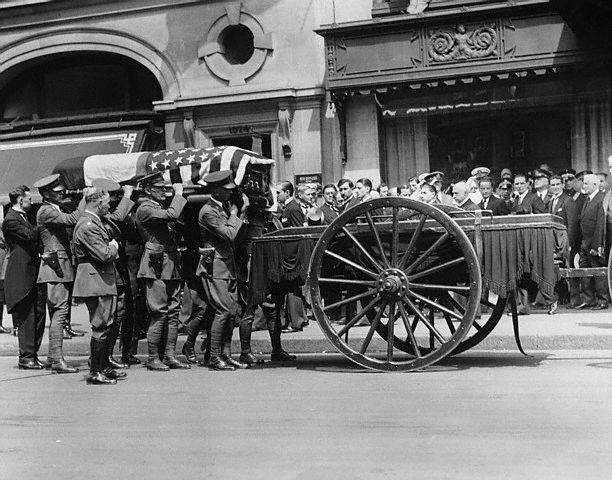 Members of the local American Legion, Post 11 of Mount Holly, New Jersey, cut a path to the crash site, and assisted in the recovery of the wreckage and Carranza's body. Upon completing his preliminary investigation of the crash site, Detective Carabine transported Captain Carranza's body to the morgue of K. Perenchieff and notified the Mexican Embassy via telegram. Shortly thereafter, a group of Army officers led by Lieutenant Mee of the Seventy Seventh Division at Camp Dix, went to Mount Holly under orders of Lieutenant Colonel Cornelius V. Wickersham. With members of the American Legion post of Mount Holly, the Army officers placed an American flag upon the coffin of Captain Carranza and took post pending arrival of soldiers reported on the way from Washington. Homages to a Hero... Ultimately, Captain Emilio Carranza's remains were taken to New York City where thousands of people paid their respect to the fallen hero. President Coolidge offered the use of the destroyer, USS Florida, to transport the body of Emilio to the port of Veracruz, Mexico. The offer was denied by the Mexican government, as it chose to transport it by train, crossing the border through Laredo, Texas. Several cities requested the train to reroute through their cities so their citizens could pay their respect to the aviator, who was ultimately buried in Dolores Cemetery in Mexico City. A stone monument in Wharton State Forest marks the quiet spot in the woods, southwest of Chatsworth. The monument was built during the 1930s, and paid for by the school children of Mexico. Planted around it are several yucca plants, stunted by the New Jersey winters. On one side is an inscription in Spanish, on the other, English: “Messenger of Peace. The people of Mexico hope that your high ideal will be realized. Homage of the children of Mexico to the aviator Captain Emilio Carranza, who died tragically on July 13, 1928 on his goodwill flight.” American Legion Post 11 has maintained the memory of Captain Emilio Carranza alive by observing through an annual memorial service at the crash site on the anniversary of his death. |