 | Check-Six.com | |
Offering Aviation History & Adventure First-Hand! | ||
| ||||||||||
|
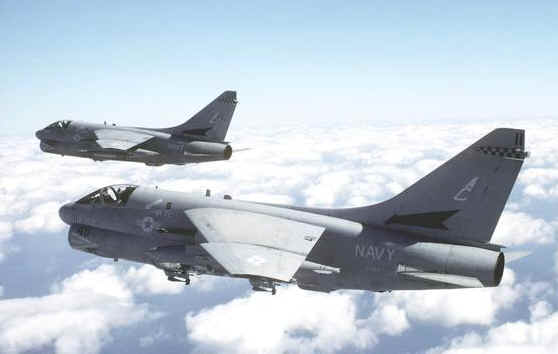
The Crash of Navy A-7E Corsair II | |||||||||||||||||||||||||||||||||||||||||
"Safety First"... Lemoore Naval Air Stationwas first conceived in 1958 because the government was concerned that an aircraft crash might occur in the heavily populated areas surrounding Moffett Naval Air Station near Palo Alto, where jet bomber in the Pacific Fleet were stationed. Commissioned in July of 1961, twenty jet attack squadrons were assigned to Lemoore from Moffett and NAS Alameda, mainly due to the establishment of a three mile "green belt" surrounding the base, located in northwestern Kings County and a portion of southern Fresno County. This "green belt" placed extreme limits of development within its limits, reserving the land for exclusively farming purposes.It was the evening of February 7, 1973, when two U.S. Navy A-7E Corsair II jet interceptors, assigned to Attack Squadron VA-195, were on a routine training flight to Sacramento from the Lemoore Naval Air Station. | |||||||||||||||||||||||||||
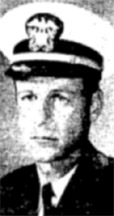
One of these Corsairs was piloted by Lieutenant John B. Pianetta, the mission's flight leader. Having served six years in the Navy, and flown combat in Vietnam, he had a somewhat dubious distinction: in November of 1971, he was on a night flight, simulating an attack when, removing a device used to cover the cockpit, he "inadvertently ejected" near Fallon, Nevada. The jet continued - unmanned - for about an hour, flying across 400 miles of desert and mountains before soft-landing near Provo, Utah.The other Corsair, bureau number 157539, was piloted by Lieutenant Robert Lee Ward, 28. A native of Charlotte, North Carolina, and a graduate of Wake Forest University, he had served in the Navy for nearly six years. Having been a flight instructor at Pensacola, Florida, he had been flying at Lemoore for just over a year, and was married with a one-year-old son.
| |||||||||||||||||||||||||||
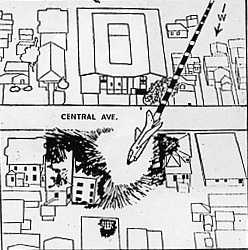
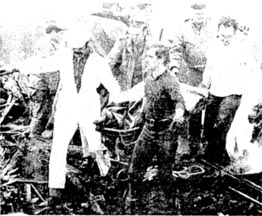
The Days After...Ward's remains, consisting only of bits of his flying suit, jersey, and his knee clipboard, were found in the hole formed by the aircraft in the basement of the Tahoe. Almost nothing remained of the aircraft. Twenty-six other people were treated at nearby hospitals and eventually released.But curiously, Ward's oxygen mask, hose, and parachute vest, were found under a pile of dirt at the crash site - dirt that would have prevented fire from reaching these after impact - indicating that the items were burned in a flash fire while the aircraft was aloft.Investigating...A Navy board of inquiry, formed at the nearby Alameda Naval Air Station and headed by Rear Admiral Herbert S. Ainsworth (Commander - Patrol Wings, U.S. Pacific Fleet), to investigate the crash, heard testimony from a number of witnesses, including two civilian metallurgists. One of them, Charles F. Choa, told the Navy board that he had found no evidence of structural failure of the aircraft before the crash, but had discovered evidence of a cockpit fire involving the pilot’s oxygen hose, and that the in-flight blaze was “very near” Ward’s oxygen mask.The second metallurgist and plastic expert, Marvin Lara, told the panel that while performing lab tests, he had managed to create a similar blaze with a glowing cigarette. Lara testified that while a lighted match took too long to produce the type of blaze present in the Corsair’s cockpit, the burning cigarette touched off the oxygen hose “immediately.” Asked whether he could determine the cause of the fire, Lara said “any flame or spark” -- although he did not specifically blame it on a lit cigarette.Lt. Richard J. Joseph, a medical doctor and the flight surgeon for Lt. Ward's squadron at Lemoore, testified that such a "flash lire" would have put the pilot out of commission at once. Dr. Joseph doubted that the same effect —with no emergency signals emitted at all from the stricken pilot would have occurred had the pilot suffered either a heart attack or the loss of oxygen resulting in anoxia. The flash fire in the mask, Dr. Joseph said, would have seared mouth, throat and lungs. "He wouldn't be able to function at all."' However, damning testimony came from Pianetta -- Ward had been smoking shortly before the flight, during his flight briefing. But, when asked by the board whether he knew if Ward was one who "smoked in his mask'' during flight, Pianetta replied that he hadn't flown with Ward prior to that flight and couldn't say. However, the theory that Ward removed his oxygen mask for a supersonic smoke was extinguished, in 2012, after a Navy report, released under the Freedom of Information Act, showed no evidence of an “in-flight fire,” and that “It is a supposition that the oxygen-fed fire occurred prior to impact." It should be noted that parts of the report that include witness statements, opinions and other findings have been withheld citing privacy exemptions. Within a year of the crash, more than $700,000 worth of legal claims had been filed in connection with the disaster, including a $500,000 damage action filed in Alameda County Superior Court by the owner of the demolished 36-unit Tahoe Apartments. Mrs. Margaret Motta, owner of the building, said in her suit against Ling-Temco-Vought (LTV), designers of the A-7 Corsair II, that a defect in the jet’s oxygen-hose construction caused a fire to be conducted directly “to the face of the pilot.”While the human toll is regrettable, one of the lesser known losses from the mishap were the personal papers of famed civilian test pilot Scott Crossfield, spanning from 1958 to 1967. According to Crossfield, "My ex-secretary from North American lived in that apartment house, and she had all my papers. I’d asked her to organize them and put them all into some kind of useful form. They were just the way we’d packed them up in boxes when we left Los Angeles. She’d gone out to dinner and this airplane burned the place down. All of those papers are gone, every note I ever took on the X-15, every bit of correspondence is gone.” As Crossfield stated in a letter dated April 6, 1973 to J.M. Tobin - who was assigned to the office of Commandant, Twelfth Naval District and Commander, Naval Base, San Francisco - the details of the record loss were extensive: “The records covered all of my activities associated with the X-15 airplane design and test, the F-100, F-107, Sabreliner, and B-70 programs associated while I was Chief Engineering Test Pilot for North American. Also contained were the documents of the design development, test, and quality assurance of the Apollo, Saturn II booster, the paraglider, and the development history of the full pressure suit started with the Navy in 1951.” The secretary, Marian L. Brown, and her family were not injured by the mishap. A Chance for Heroism...In July of 1973, Seaman Glenn W. McCarty, 21, received the Navy & Marine Corps Medal for heroism for rescuing Mona Mclntire from the crash site.
| |||||||||||||||||||||||||||
| |||||||||||||||||||||||||||
The Crash Site Today | |||||||||||||||||||||||||||
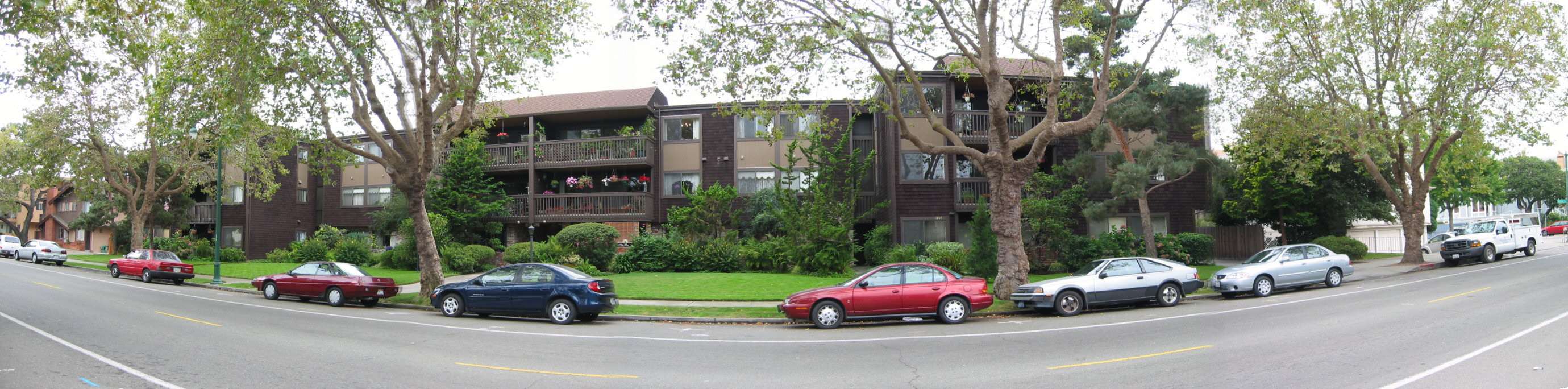
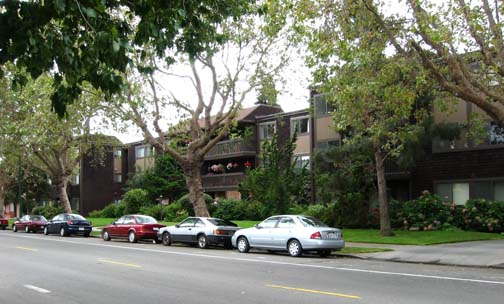 | Today on the crash site is an apartment complex called "The Sycamore." The address, 1814 Central Avenue, is not be be found on any of the current buildings. Built three years after the crash, the complex houses 24 luxury condominiums. | ||||||||||||||||||||||||||
| |||||||||||||||||||||||||||
|