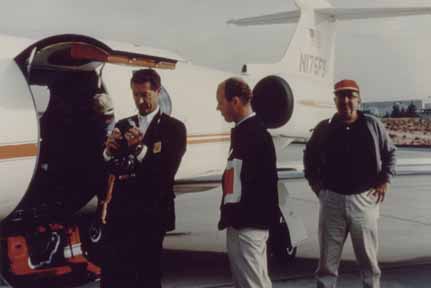
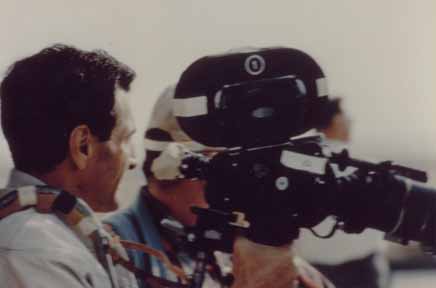
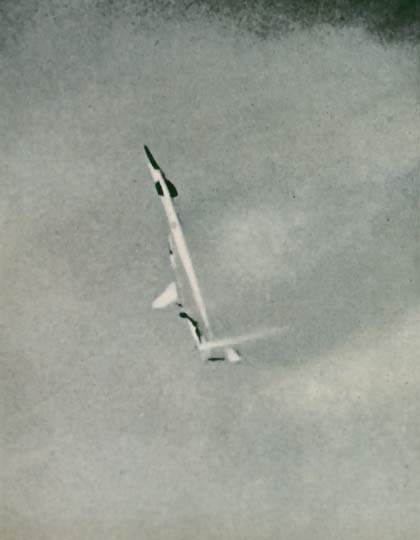
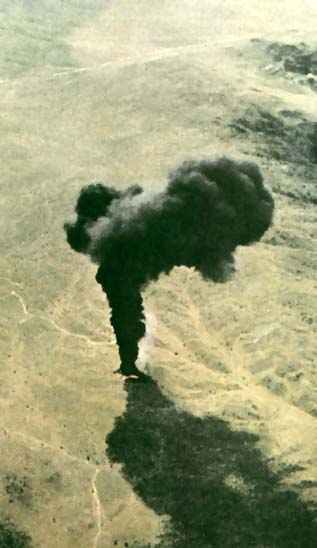
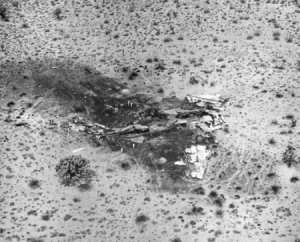
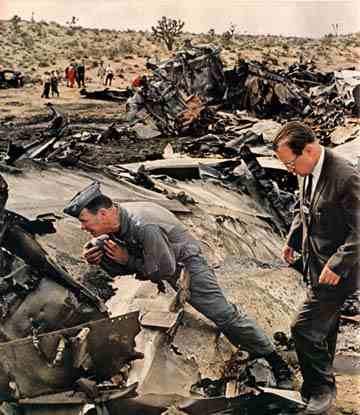
Four Air Force officers were charged with causing the crash. They were Colonel Joseph F. Cotton, the XB-70 test force director, and Albert M. Cates, director of systems test at Air Force Flight Test Center, Lt Col James G. Smith, the director of information (soon to be public affairs), and Lt. Bill Campbell, the chief of media relations at Edwards.
According to Campbell, at the urging of a Texas congressman, and head of military appropriations, the Air Force convened a "collateral board" to find those responsible. Unfortunately, the man who was responsible, Joe Walker, perished in the mid-air.
So the Air Force had to find someone else to blame.
As Campbell recalled, the board was headed by a two-star improbably named Joseph Cody, the chief of staff of the Air Force Systems Command . He had a staff of about eight. All four of the accused had Air Force-appointed lawyers. Campbell was the only one to testify, the others taking the military version of the fifth. The four were charged with violating AF regulations saying if a picture was to be taken with possible national merit, the Secretary of the Air Force's Office of Information (now Public Affairs) would have to bless it.
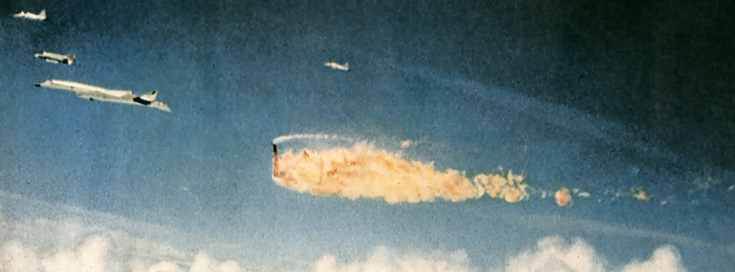
Campbell states that if Walker not brought down the XB-70 the photo would have been pretty vanilla. Naturally, after the crash, the photo was pretty special. But the Air Force ("We take care of our own.") needed to hang someone and the four were the most available.
Campbell testified that he LEARNED of the flight when a Major from the Los Angeles branch of SAF/OI called him on a Friday to see if his office wanted press to attend the formation flight, scheduled for Monday or Tuesday of the next week. Campbell stated that knew nothing of the "formation" aspect of the flight and asked his boss, Lt. Col. Jim Smith, if he knew anything. Smith did not, but put in a call to Colonel Joe Cotton, the XB-70 test force director. Cotton explained that, yes, there was a formation flight with an F-4, T-38, F-5, B-58 and F-104 scheduled, all GE-powered airframes (The B-58 broke on the day of the flight). BBD&O, the Public Relations firm for GE, had been bugging Cotton for such a photo op, and this flight was perfect as Major Carl Cross, recently having joined the test project, was taking his first ride, hence the max Mach number for much of the flight was .86, a speed the Lear photo chase jet could keep up with.
So Campbell's testimony was why should he have asked for SAF/OI approval when he had just learned of the flight from a SAF/OI representative? Campbell was exonerated. But the three others received a transfer (Cates), or letters of reprimand.
Interestingly enough, the Major who told Campbell of the flight showed up in his office during the trial. The Major was taking his family out for a visit to the AFFTC. The trial was on a break, but Campbell told him to stay where he was and reported to General Cody that the guy who told him about the flight was actually in Campbell's office! Cody called for a recess and then told him to send the Major on his way, as the court did not want to talk to him. In Campbell's opinion, the Air Force wanted to settle this matter at the lowest possible level.
Of further interest, Campbell's attorney contacted the Air Force Director of Information, then Brig. Gen. Eugene "Ben" LeBailley and asked him what he would have done had he known of the flight. The general sent a reply back that said, "I would have complied with AFR 190-10, AFR 190-12..." and a lot of other regulations, cementing Campbell's impression of "We take care of our own."