

| | 
Who: Sigismund Levanevsky, pilot, adventurer, and awarded the "Hero of the Soviet Union" - was also known as "the Soviet Lindbergh"
| | | Total Persons on Board: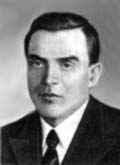 | | Sigismund Levanevsky |
Six - Levanevsky, and five others: N. G. Kastanaev, second-in-command & pilot Victor. I. Levchenko, navigator N. J. Galkovsky, radio operator Gregory T. Pobezhimov, mechanic N. .N. Godovokov, mechanic
When:August 12, 1937 (Moscow Time: August 13th, 1937, at 17:58)
Weather:Cold temperatures - typical of the Arctic, and high winds & ice
Flight Route:From Moscow to New York City, with stops in Fairbanks and Chicago.
Area Believed Crashed:Radio operators on the ground received Levanevsky's last radio message when the plane was 300 miles past the North Pole, headed for Alaska.
Reason for flight:To prove a commercially-viable transpolar flight route between Asia and North America.
Type Plane:A four-engine Soviet-made Bolkhovitinov-A bomber, tail number H-209
Search efforts: Prior to loss of radio contact, the flight crew reported loss of power in their outer starboard engine. On August 16, the Russian government contacted explorer Sir Hubert Wilkins, and asked for his assistance in the search & rescue operation. His search team covered an area larger than the state of Montana, to no avail, through mid September flying over 10,000 miles crisscrossing the Arctic. The searchers assumed Levanevsky’s aircraft crashed into the Arctic Ocean and sunk to the bottom. A member of the search crew was Jimmy Mattern, who had in 1933, been rescued by Levanevsky when Mattern's Lockheed Vega crashed in Siberia during a solo circumnavigation attempt.
Controversy:
In March 1999, Dennis Thurston of the Minerals Management Service in Anchorage noticed an unusual shape on a sonar image of the sea floor during an ARCO pre-drilling survey. In the shallows of Camden Bay, between Prudhoe Bay and Kaktovik, was something shaped like a 60-foot cigar. Thurston thought the cigar looked like the fuselage of an airplane. Thurston traveled to Fairbanks for a conference in early May and showed the oddity to David Stone, a professor emeritus at the Geophysical Institute who had searched for the Levanevsky plane years before. "When David saw the image, he immediately said 'Levanevsky!'" Thurston said. "I knew I was in trouble." A year later, a submarine search of the site, however, was unable to find any trace of an airplane.
| 
|                               
|
|